
Imagine this: the river card hits, you’re staring down a seemingly unbeatable hand, and your chip stack is dwindling. Most players would fold, resigned to their fate. But a seasoned poker player sees an opportunity, a chance to rewrite the narrative. They push all-in, betting everything on a carefully constructed lie. Their opponent hesitates, analyzes, and ultimately folds, handing over the pot and shifting the momentum of the entire game. That is the power of bluffing.
Bluffing isn’t just about luck; it’s a calculated art form, a crucial component of any winning poker strategy. This isn’t your beginner’s guide to haphazardly pushing chips. This guide will equip you with actionable strategies, and insightful tactics that separate the sharks from the fish. You’ll learn how to identify prime bluffing opportunities, master the art of deception, and ultimately, tilt the odds in your favor.
Consider this guide your handbook to a more strategic game. So, prepare to elevate your game beyond the basics and discover the world of advanced poker strategy.
Understanding the Fundamentals of Bluffing
Poker bluffing is a strategic deception where a player bets or raises with a weak hand to convince opponents they hold a stronger one. It’s not merely random betting; it’s a calculated risk designed to extract value or win the pot outright when holding a less-than-ideal hand. A well-executed bluff hinges on understanding your opponents, reading their tendencies, and exploiting their weaknesses. Bluffing is most effective when incorporated into a broader, balanced poker strategy.
A balanced strategy means mixing bluffs with value bets – bets made with strong hands aiming to get called. Without bluffs, an opponent can simply fold every time you bet, knowing you always have a strong hand. On the other hand, constant bluffing makes you easily predictable and exploitable. The sweet spot lies in a balanced approach, where your betting actions don’t automatically reveal the strength of your hand.
Bluffing frequency should correlate with your overall hand range and the specific situation. For instance, in Texas Hold’em, a player with a tight image can get away with fewer bluffs, as opponents are more likely to give them credit for having a strong hand. Conversely, a loose, aggressive player, known for frequent betting, might need to bluff more selectively to maintain credibility. Situational factors, such as board texture, position, and pot size, also influence the effectiveness of a bluff. Successful bluffing isn’t just about the cards you hold, but also about understanding player psychology and the nuances of the game dynamics.
The Importance of a Balanced Range
Imagine your poker hand range as a toolbox. If you only have hammers (strong hands), your opponents will quickly learn to avoid nails when you’re around. A balanced range, however, is a toolbox with a variety of tools, from screwdrivers (medium-strength hands) to wrenches (bluffs), making it difficult for opponents to predict what you’re going to use. This unpredictability is key to a successful poker strategy.
A polarized range represents the extremes – either very strong hands or complete bluffs, with few medium-strength hands in between. This can be effective, but also carries risk. A balanced range incorporates hands across the spectrum, making it harder for opponents to read you. A balanced range is more about range equilibrium, which means that your bluffs and value bets are proportional. For example, on a board that favors aggressive play, a bluff-heavy range might be appropriate. On a dry board that doesn’t connect well, a more value-oriented range might be better. Learning to adjust your range to fit the situation is key to escaping the label of a readable player.
Identifying Ideal Bluffing Opportunities
Successful bluffing in poker hinges on identifying the right moments. It’s not about randomly pushing chips; it’s about carefully assessing various factors to maximize your chances of success. Several elements create prime bluffing spots, and understanding these can significantly improve your win rate.
One crucial aspect is understanding your opponent’s tendencies. Is your opponent tight or loose? Passive or aggressive? A tight, passive player is far more likely to fold to aggression, especially on later streets. Conversely, a loose, aggressive player might call your bluff more often, requiring a more nuanced approach. Observing betting patterns and previous hands can offer valuable insights into their playing style.
The board texture also plays a vital role. A draw-heavy board (one with multiple potential straights or flushes) can be a great bluffing opportunity. Players are often hesitant to call big bets when they don’t have the nuts or a strong draw, fearing they’re up against a made hand. Dry boards are less suited for bluffing, as players are less likely to have strong hands and may be more willing to call with marginal holdings.
Positional advantage is another key consideration. Bluffing from late position (being one of the last to act) gives you more information and control over the pot. You can see how other players react before making your decision, allowing you to tailor your bluff accordingly. If everyone checks to you on the river in late position, a well-timed bluff can often win you the pot.
For example, imagine a board of 7-8-9, with two hearts. This is a draw-heavy board. If your opponent is a tight player who checks to you on the river, a bluff might be very effective.
Certain times in tournaments are also ripe for bluffing, particularly near the bubble. Players clinging to their tournament lives are often unwilling to risk elimination by calling big bets, making them more susceptible to well-timed bluffs. Recognizing these situations and adjusting your strategy accordingly can lead to profitable outcomes.
Reading Your Opponent
While mastering the technical aspects of poker is essential, understanding player psychology can give you a significant edge. Observing your opponents’ behavior, both online and offline, can provide valuable clues about the strength of their hands.
In live poker, looking for “tells” – subtle changes in body language – is a common strategy. A shaky hand might indicate nervousness, suggesting a bluff or a big hand. Similarly, avoiding eye contact could be a sign of deception. However, it’s important to remember that tells are not foolproof and can be misleading. Some players intentionally try to mislead their opponents. Also, the ‘stare’ is an amateur move, that any experience player is used to.
In online poker, physical tells are obviously absent, but other clues exist. Pay attention to the speed of their actions. A very quick call or bet might indicate a strong hand, while hesitation could suggest a weaker holding. Also, the chatbox can give insight what they are thinking or feeling. Tilting after losing a big hand can make a player more prone to making rash decisions. Identifying these players and exploiting their emotional state can be a profitable strategy.
Ultimately, reading your opponent is about gathering as much information as possible and using it to make informed decisions. It’s one piece of the puzzle, not the entire solution, but mastering this skill can greatly enhance your poker game and your bluffing ability.
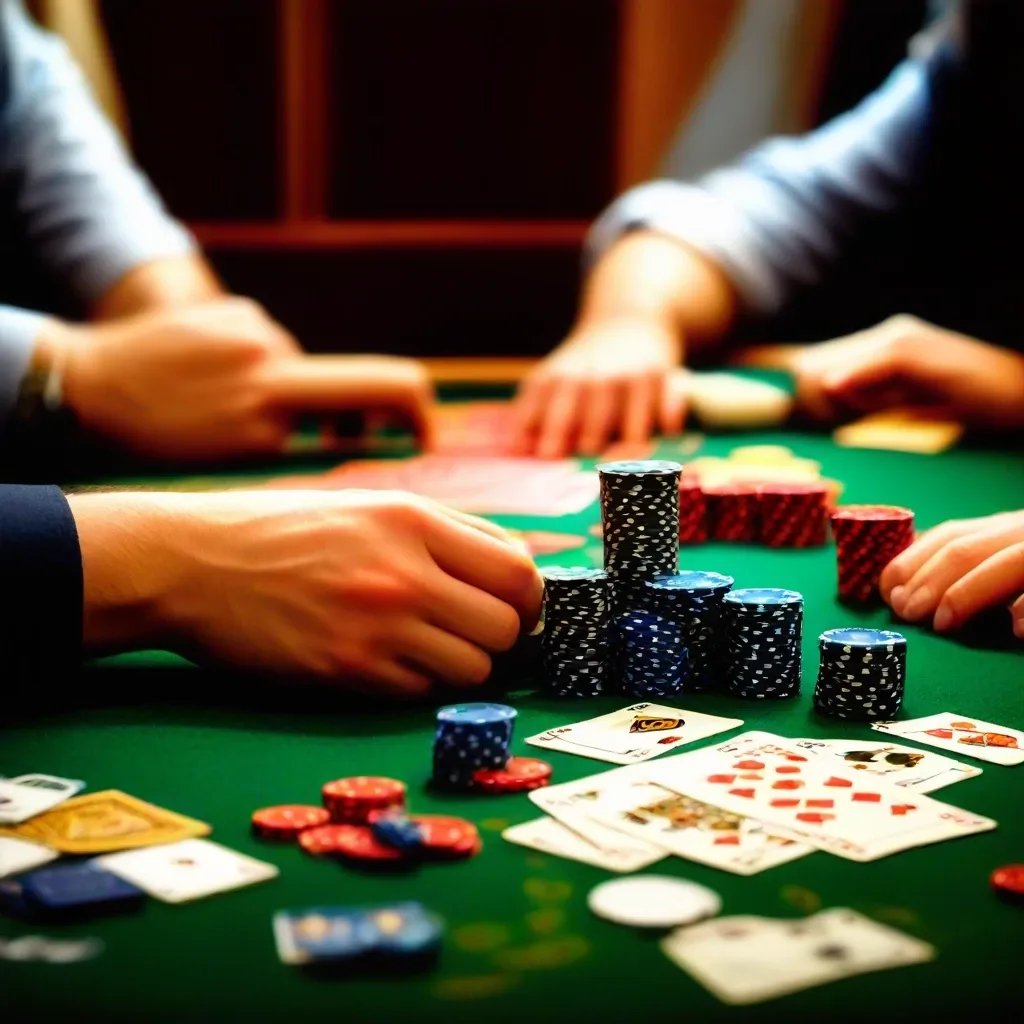
Mastering Bluffing Techniques
Bluffing is an essential skill in poker, adding a layer of complexity and deception to the game. Successfully executed bluffs can win pots even with weak hands. Several bluffing techniques exist, each suited for different situations.
Semi-bluffing involves betting or raising with a hand that isn’t currently the best but has a reasonable chance of improving to a strong hand on later streets. For example, if you hold A♥ 8♥ on a 5♥ 6♦ 2♣ flop, you might bet, representing a strong made hand, but also hoping to hit your flush draw. The goal is to win the pot immediately or improve to the best hand.
River bluffing is a high-risk, high-reward play made on the final betting round. It involves betting with a weak hand when you believe your opponent will fold a better hand. This works best when your perceived range is strong, and the board texture suggests you could have a strong holding. An example would be if you raised pre-flop and bet the flop and turn. You can bet the river as well to push your opponent out of the pot.
A check-raise bluff is when a player first checks, and then raises after an opponent bets. This move can be very effective at representing immense strength and pushing opponents off their hands.
The double barrel bluff involves bluffing on both the flop and the turn. For example, if you raised pre-flop, you can bet the flop, and if your opponent calls, you can bet the turn as well. This is often used when a scare card hits on the turn, representing that you hit a strong hand.
Leveling
Leveling in poker refers to the different levels of thinking players employ to outsmart their opponents. Understanding these levels is critical for making informed decisions and exploiting your opponents’ thought processes.
1st level thinking is the most basic, where a player considers only their own hand. For example, “I have a pair of aces.”
2nd level thinking involves considering what your opponent might have. For example, “I have a pair of aces, but he might have a better hand than me.”
Leveling occurs when you start thinking about what your opponent thinks you have. For example, “I have a pair of aces, but he might think I’m bluffing with a weak hand, so I should value bet.” This is where bluffing and counter-bluffing come into play. A solid way to outsmart your opponent is by going a level above them to trick them.
The Psychological Game of Bluffing
Poker transcends mere card values; it’s a complex psychological dance. Successful bluffing hinges on a keen understanding of poker psychology, allowing you to dissect your opponents’ behaviors and mask your own. This involves a constant effort to spot and interpret reading tells, or unconscious signals that betray their hand strength; or weakness. These tells can manifest physically – a tremor in their hand, a quickened breath, or averted gaze – or digitally, such as delayed response times or unusual bet sizing patterns. Conversely, mastering controlling tells is crucial. This means consciously managing your own body language and betting patterns. Novice players often exhibit obvious tells, such as prolonged eye contact when bluffing or exaggerated sighs when holding a strong hand. Learning to maintain a neutral demeanor, regardless of your hand, is paramount.
Beyond basic observation lies the realm of mind games. Experienced players employ “leveling,” anticipating their opponent’s thoughts about their own hand. For instance, a player might make a seemingly obvious bluff, knowing their opponent will perceive it as such and call with a slightly weaker hand. This intricate psychological battle, where perceptions and misdirections reign supreme, is the key to winning crucial chips, or scooping an important pot (or stack of chips).
Managing table image
Your table image is the perception other players have of your playing style. In live poker strategy, carefully cultivating and managing reputation is really important to your success. This is about more than just avoiding bad beats; it’s about strategically leveraging that image to your advantage. For example, a player perceived as tight and conservative can often execute a well-timed bluff with a higher probability of success, as opponents are less likely to suspect them of such a move. Conversely, a loose and aggressive player might find their bluffs called more frequently, but can also extract more value from their strong hands.
Effective image leverage involves understanding how your perceived style influences your opponents’ decisions. What image types are best depends on the table composition and your overall strategy. While a maniacal image can be profitable in certain situations, it’s generally advisable to avoid extremes. A balanced and unpredictable style, where you occasionally deviate from your established image, is often the most effective. Be adaptable, and manipulate the table’s perception of you.

Advanced Bluffing Concepts
Once you’ve mastered the fundamentals of bluffing, the poker landscape opens to a world of intricate tactics and psychological maneuvering. Expert players don’t just randomly throw out bluffs; they carefully construct them based on a deep understanding of their opponents, the board texture, and game theory principles. This involves techniques like light three-betting, floating, range merging, and employing exploitative bluffs.
Light three-betting, for example, isn’t about having a monster hand. It’s about re-raising pre-flop with a wider range of hands than you normally would, aiming to steal the pot or gain valuable information about your opponent’s holding. Floating, on the other hand, takes place post-flop. It involves calling a bet with a weak hand, intending to take the pot away on a later street when your opponent checks. Range merging is another advanced tactic where you are trying to get max value with the best hand in your range. Exploitative bluffing is a high-risk, high-reward strategy that preys on specific tendencies of your opponents. See if they are likely to fold, call or raise in certain spots to adjust your gamestyle to take advantage of your opponents.
Game Theory Optimal (GTO) Bluffing
Game Theory Optimal (GTO) bluffing revolves around the concept of playing an unexploitable style of poker. This means balancing your ranges, so your opponents can’t easily predict whether you are betting with a strong hand or bluffing. A GTO approach considers all possible scenarios and aims to make decisions that are mathematically sound, making you harder to read. Defending against different types of bets is also a crucial component of GTO play. Learn the way your opponents play to make the right choices.
By striving for GTO, you become a tougher opponent to exploit in the long run, increasing your chances of success. However, GTO is a complex strategy and it’s essential to have a strong understanding of poker math and game theory to implement it effectively. You want to be unpredictable, but you also want your bets to be reasonable. Game Theory Optimal bluffing is optimal for winning long term.
Avoiding Common Bluffing Mistakes
Bluffing is an essential part of poker, but it’s also where many players make mistakes. Knowing when and how to bluff effectively can significantly improve your win rate. Let’s dissect some common pitfalls and ways to correct them.
Over-Bluffing: One of the most frequent errors is bluffing too often. It’s tempting to try and steal every pot, but good opponents will quickly recognize this pattern and start calling you down with weaker hands. Statistics show that players who over-bluff tend to have a lower win rate by as much as 15-20% compared to those who bluff selectively. To correct this, analyze your recent hands and see how often you’re bluffing versus having the actual nuts. Adjust your frequency accordingly.
Under-Bluffing: On the flip side, some players rarely bluff, making them extremely predictable. When they bet big, everyone folds. This can also be a losing strategy since you’re missing out on opportunities to win pots when you don’t have the best hand. Aim for a balanced approach where you’re bluffing enough to keep opponents guessing, but not so much that they start calling you light.
Bluffing into a Station: A “station” is a player who loves to call bets, regardless of their hand strength. Trying to bluff these players is generally a bad idea. They’re unlikely to fold, even to large bets. Avoid bluffing into stations. Identify them at the table and adjust your strategy to value bet them relentlessly.
Wrong Timing: Timing is vital in bluffing. Bluffing on early streets (pre-flop or on the flop) can be riskier because there are more cards to come that could ruin your bluff. Bluffing on the river, when all the cards are out, can be more effective because your opponents have less information to work with. However, the best timing depends on the particular situation, the board texture, and your opponent’s tendencies.
Conclusion
Mastering the art of bluffing is not merely about deceiving opponents; it’s a fundamental pillar of poker success. True poker mastery requires continuous learning, adaptation, and a willingness to refine your techniques. The information discussed previously gives you the knowledge to elevate your game, but theory alone is insufficient.
Consistent practice is crucial. Start by implementing these bluffing strategies in low-stakes games or online simulations. This will allow you to observe opponent reactions and adjust your approach accordingly. With dedicated effort, you can significantly improve poker skills and enhance your decision-making at the table. Continue to develop your skills, and remain a student of the game. Remember, poker mastery is a journey, not a destination.